
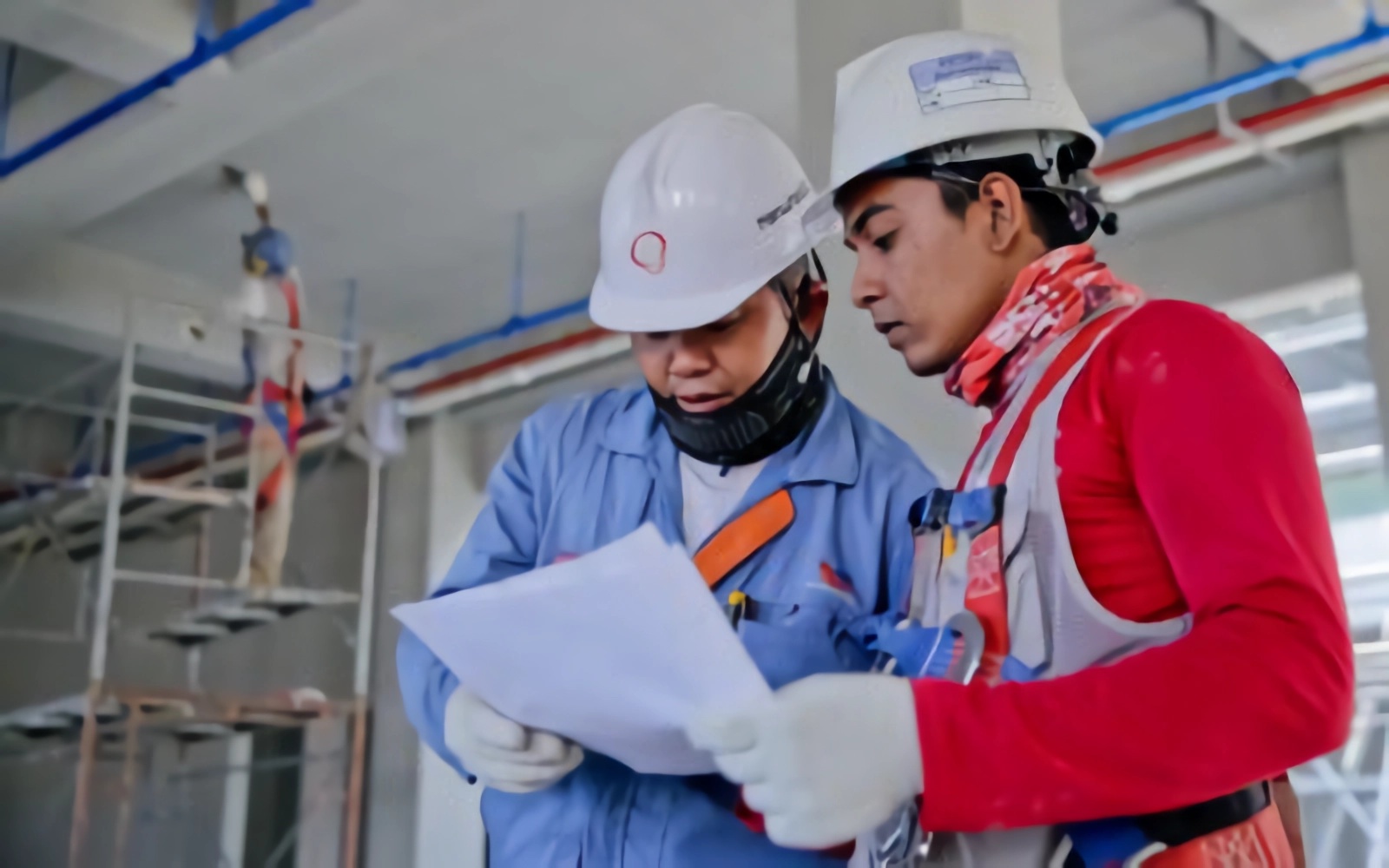
Workplace, Safety and Health (WSH) officers and manpower are hired by main contractors to maintain a safe environment for workers during all stages of a construction project. They are responsible for developing and submitting safety plans to relevant authorities, as well as conducting regular site patrols to identify hazards and safety violations.
On a daily basis, WSH personnel roam the site to monitor compliance and reduce risks. These combined efforts play a critical role in creating safer construction environments.
How Can Video Analytics Play a Part in Site Safety?
#1 Automated Alerts
With the ability to monitor site activities 24/7 in real time, video analytics can generate automated alerts that are sent directly to WSH personnel. This ensures that safety violations are detected even when officers are not physically present on site.
Automated alerts help free up valuable time for WSH personnel, especially when they are occupied with administrative tasks such as preparing reports, documentation for authorities, or managing safety timeouts.
#2 Materials for Safety Education
Video analytics software can automatically capture short video clips before and after a safety incident occurs. These clips can be used as powerful materials for safety education and training sessions.
Traditionally, safety officers may need to verbally warn workers without concrete evidence, or spend time manually extracting CCTV footage. Video analytics eliminates this inefficiency by providing ready-to-use visual proof of unsafe acts.
When such footage is shared during safety briefings, workers become more aware of their actions, reinforcing accountability and strengthening overall safety culture on site.
#3 Better Workflow
Ailytics’ AiSafety module provides an intuitive dashboard that logs all detected safety alerts while simultaneously notifying WSH personnel through their preferred messaging platforms.
This streamlined workflow allows users to receive instant alerts, take immediate action, and update incident statuses centrally. Every flagged incident can be tracked, reviewed, and resolved systematically.
As a result, safety enforcement becomes more proactive, measurable, and consistent—leading to improved safety performance across both sites and subcontractors.